


There’s something wonderfully absurd about a paper cup.
You walk into a coffee shop, order a cappuccino, and walk out holding what looks like an environmentally responsible decision.
Not a plastic cup.
A paper cup.
Brown, white, sometimes decorated with little green leaves to make you feel even better about yourself.
And then you throw it away.
But there’s a small problem.
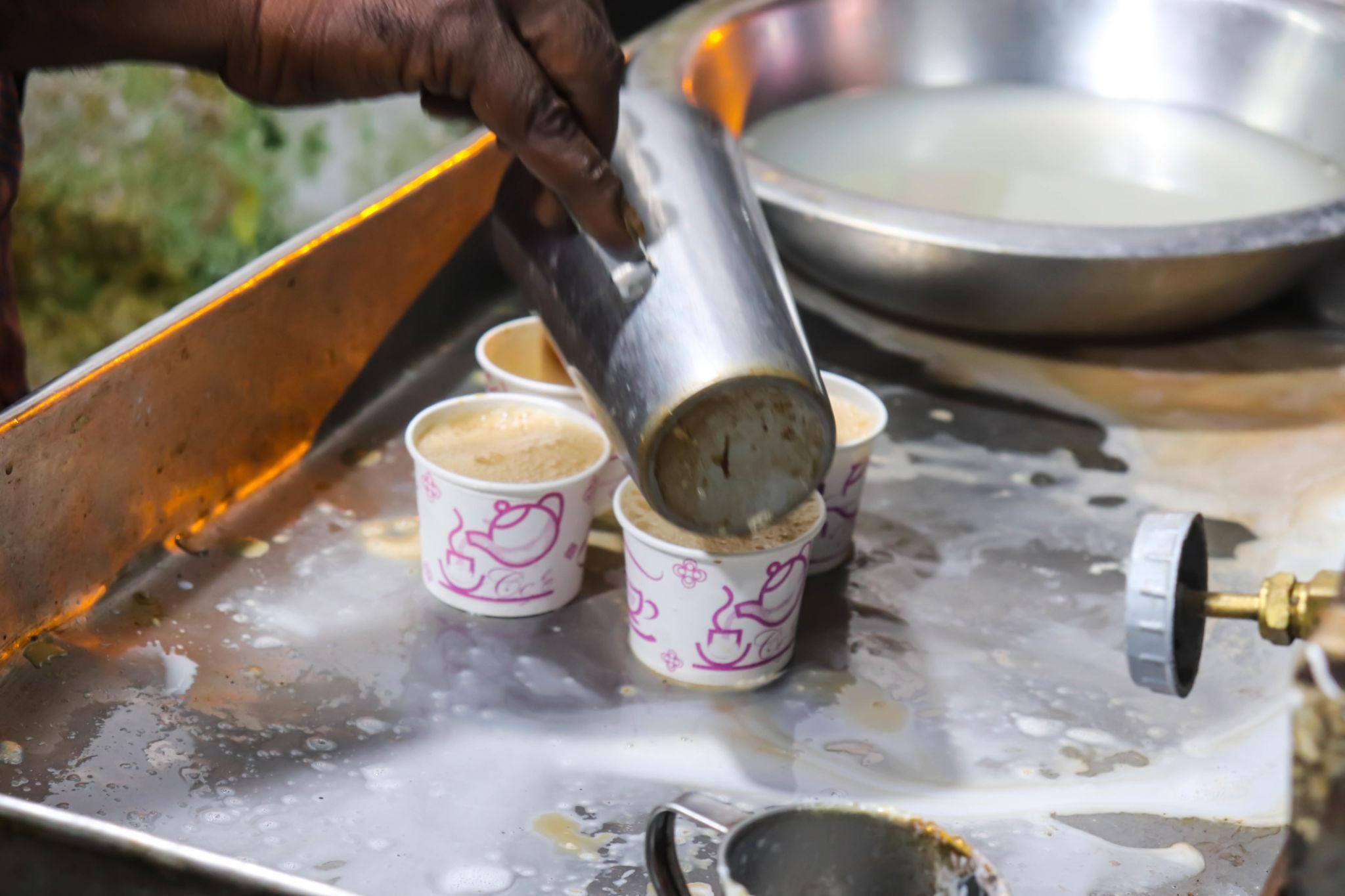
Your paper cup isn’t entirely paper.
In fact, in Tamil Nadu, this seemingly harmless object became the subject of a legal battle that reached the Supreme Court of India.
And the most interesting part of the story isn’t that the cup contains plastic.
It’s how little plastic was enough to cause such a big problem.
The 6% problem
In October 2023, the Supreme Court heard a case involving the Tamil Nadu and Puducherry Paper Cup Manufacturers Association.
The manufacturers argued that their cups were environmentally friendly. And on paper, their argument sounded rather convincing.
The cups contained 94% food-grade paper and just 6% low-density polyethylene (LDPE).
Six percent.
That’s the amount of plastic the manufacturers said was necessary to make the cups water-resistant.
Without a protective lining, paper fibers absorb liquid, weakening the cup.
Which is not ideal when you’re carrying hot coffee, particularly if you’ve just paid ₹300 for it.
The plastic coating solves that problem rather elegantly.
It allows paper to behave like a waterproof container.
Except that the same coating creates another problem when the cup becomes waste.
Paper mills want paper fibers.
Plastic recyclers want plastic.
And we’ve manufactured a product in which the two materials are bonded together, often used for a few minutes, and then thrown into an enormous, mixed waste stream.
It’s a remarkable little engineering achievement.
And a surprisingly inconvenient piece of garbage.
But wait. Isn’t it recyclable?
Technically, yes.
This is where the story becomes more interesting than the usual argument about plastic versus paper.
Specialized recycling facilities can process plastic-lined paper cups.
The fibers can be recovered, and the lining can be separated through appropriate processing.
So it would be incorrect to claim that these cups are impossible to recycle.
But there’s a considerable difference between something being technically recyclable and something actually being recycled.
Most conventional paper mills aren’t designed to efficiently separate the tightly bonded lining from the fiber.
Specialized processing takes additional equipment, time, and collection arrangements. And before the cup even reaches a recycling plant, someone has to collect enough of these lightweight, frequently contaminated cups to make the entire exercise economically worthwhile.
Imagine collecting a thousand used coffee cups from a hundred different tea shops. Someone must separate them, empty the leftover tea, store them, transport them, and find a facility willing to process them.
The cup may be recyclable.
The collection system might not exist to recycle it.
That’s the distinction we routinely ignore when we put a recycling symbol on packaging.
The paper cup that went to the Supreme Court
Tamil Nadu issued its single-use plastic restrictions in June 2018, with implementation beginning on January 1, 2019.
The restrictions specifically included plastic-coated teacups.
The manufacturers challenged the decision.
Their argument was not simply that their businesses would suffer, although that was part of it.
They maintained that the cups could be recycled, that the plastic content was minimal, and that banning the product rather than improving collection was disproportionate.
There was even discussion of a buyback mechanism for used cups.
Now, that’s an interesting proposition.
Instead of treating the cup as worthless after use, manufacturers could potentially help create a system in which used cups were collected and returned for processing.
But the question before the Court was whether Tamil Nadu’s restriction was legally justified.
On October 20, 2023, the Supreme Court upheld the ban on plastic-coated paper cups, finding sufficient grounds for the state’s environmental policy.
The judgment highlighted difficulties surrounding collection, segregation, recycling, and the environmental consequences of widespread single-use consumption.
In other words, the problem was never just the six percent of plastic.
It was what happened to that six percent, and the other ninety-four percent, after the tea was finished.
We keep solving the wrong part of the problem
We’ve developed a rather strange relationship with packaging.
Plastic looks bad, so we replace it with paper.
Paper absorbs liquid, so we coat it with plastic.
The resulting product looks environmentally friendly, so we put it in a paper recycling bin.
Then we discover that the recycling plant needs special equipment to process it.
And somehow, we’re surprised.
The underlying mistake is treating a material as sustainable simply because of what it’s called.
Paper.
Plastic.
Biodegradable.
Compostable.
Recyclable.
These words tell us something about a material.
They don’t necessarily tell us what happens to the finished product in the real world.
A technically recyclable cup without a viable collection system may still become waste. A compostable product without appropriate composting conditions may not break down as expected.
And a reusable product that gets thrown away after one use has missed much of the point of being reusable.
The environmental performance of a product depends on more than its ingredients. Its design, how many times it gets used, how it’s collected, and what infrastructure actually exists to process it all matter.
That’s something worth remembering the next time someone proudly announces that they’ve replaced plastic packaging with paper.
The first question shouldn’t be whether the new material sounds greener.
It should be: What happens to it after someone throws it away?
The answer might already be sitting at your tea shop
There’s something almost poetic about the alternative.
Long before disposable cups became ordinary, tea shops across South India served coffee in stainless steel tumblers.
The famous davara-tumbler combination wasn’t invented as a sustainability innovation.
It was simply a practical way of serving coffee.
Use it.
Wash it.
Use it again.
Of course, reusable systems have their own water, energy, cleaning, and operating costs.
They’re not magically impact-free.
But when a durable cup is used repeatedly and washed efficiently, it avoids the need to manufacture and discard a new container with every drink.
And unlike a disposable cup, it doesn’t require us to solve a complicated material-separation problem after every cappuccino.
This doesn’t mean every paper cup is terrible or every steel tumbler is automatically better in every situation.
It means we should stop confusing a material substitution with a complete environmental solution.
Because sometimes the most sustainable innovation isn’t a new material, a clever coating, or an elaborate recycling technology.
Sometimes it’s an old steel tumbler that somebody remembered to wash.
We replaced plastic with paper.
Then put plastic inside the paper.
And spent years arguing about what to do with it.
Maybe the cup wasn’t the only thing that needed rethinking.
Source notes: Tamil Nadu and Puducherry Paper Cup Manufacturers Association v. State of Tamil Nadu, Supreme Court of India, October 20, 2023 (2023 INSC 952); UK Confederation of Paper Industries, Recycling of Coffee Cups (2020); UK House of Commons Environmental Audit Committee, Disposable Packaging: Coffee Cups (2018).