


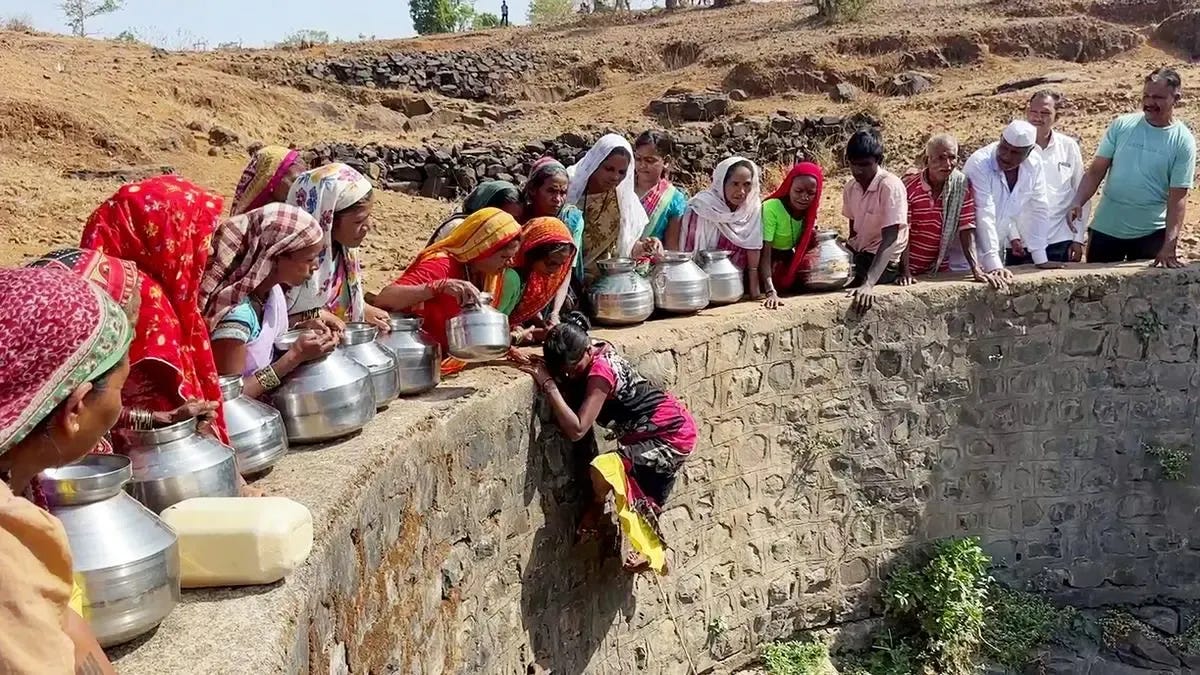
People in this Maharashtra village were walking up to 1.5 kilometres to fetch water.
Meanwhile, there was water in the air around them.
You can see where this is going.
But stay with me, because the interesting part is how they’re collecting it.
The village is called Wadji.
Around 2,000 people live here, and getting drinking water has meant travelling to collect it and carrying it back.
Think about the effort involved in that.
Before work, before school, before anything else, someone has to go get water.
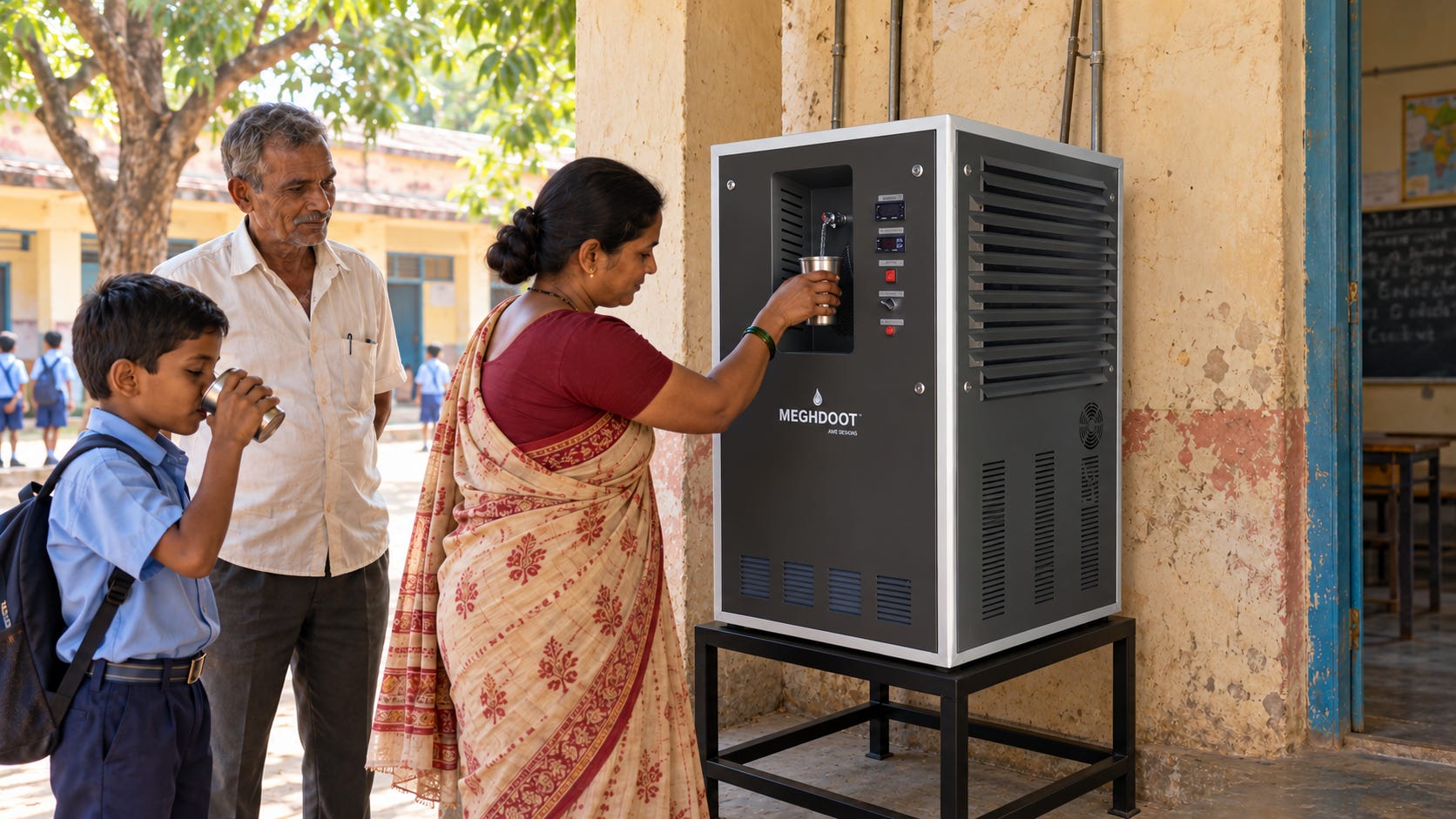
The village now has a machine called Meghdoot, installed at its primary school and Anganwadi.
It can produce up to 500 litres of drinking water a day from moisture in the air.
When I first read this, I wanted to understand how it actually works.
Because “water from air” sounds like the kind of claim you’d see in a startup pitch deck.
But the principle is something we’ve all seen.
Leave a cold glass outside for a few minutes. Droplets form on its surface. That’s moisture from the surrounding air cooling and turning into liquid.
Meghdoot does this deliberately. It draws air in, cools it, collects the water, then filters and disinfects it for drinking. The system was developed through a collaboration between CSIR-IICT in Hyderabad and Maithri Aquatech.


The science is familiar.
Putting it to work at a village school is absolute gold.
There are practical limits, of course.
The machine needs electricity and maintenance.
Its output depends on temperature and humidity, so 500 litres is its capacity under suitable conditions.
You can’t assume it will deliver that every day.
And let’s put that number in perspective.
Five hundred litres for a village of 2,000 people works out to 250 millilitres per person.
One glass each, even at full output.
So we shouldn’t turn this into “an entire village’s water crisis has been solved.”
What Wadji has is an additional source of drinking water, located at a school, without having to draw that water from another well.
But think about what it can mean.
A place to fill a bottle.
Water available at school.
A source that doesn’t require drilling another borewell.
We often judge an invention by how extraordinary it looks.
This one deserves attention for something much simpler:
How much closer it can bring a glass of water.