


Walk into any office in Gurugram, Bengaluru, or Pune right now. Check the bin under someone’s desk.
India generates close to 62 million tonnes of municipal solid waste every year, and a growing share of it starts at the workplace, not the home.
Indians now go through an estimated 24 billion disposable paper cups a year.
Most get used once, for a five-minute chai break, then thrown straight into a bin that mixes everything together.
Paper cups are just the visible part.
The real weight sits in printouts nobody collects, lunch boxed in plastic nobody separates, and old laptops stacked in a storeroom because nobody knows where e-waste is supposed to go.
Companies budget lakhs for cybersecurity training, sales training, POSH training. Waste gets a poster in the pantry, if that.
That gap used to be a quiet inefficiency.
From April 1, 2026, under India’s new Solid Waste Management Rules, it becomes a compliance risk with your company’s name on it.
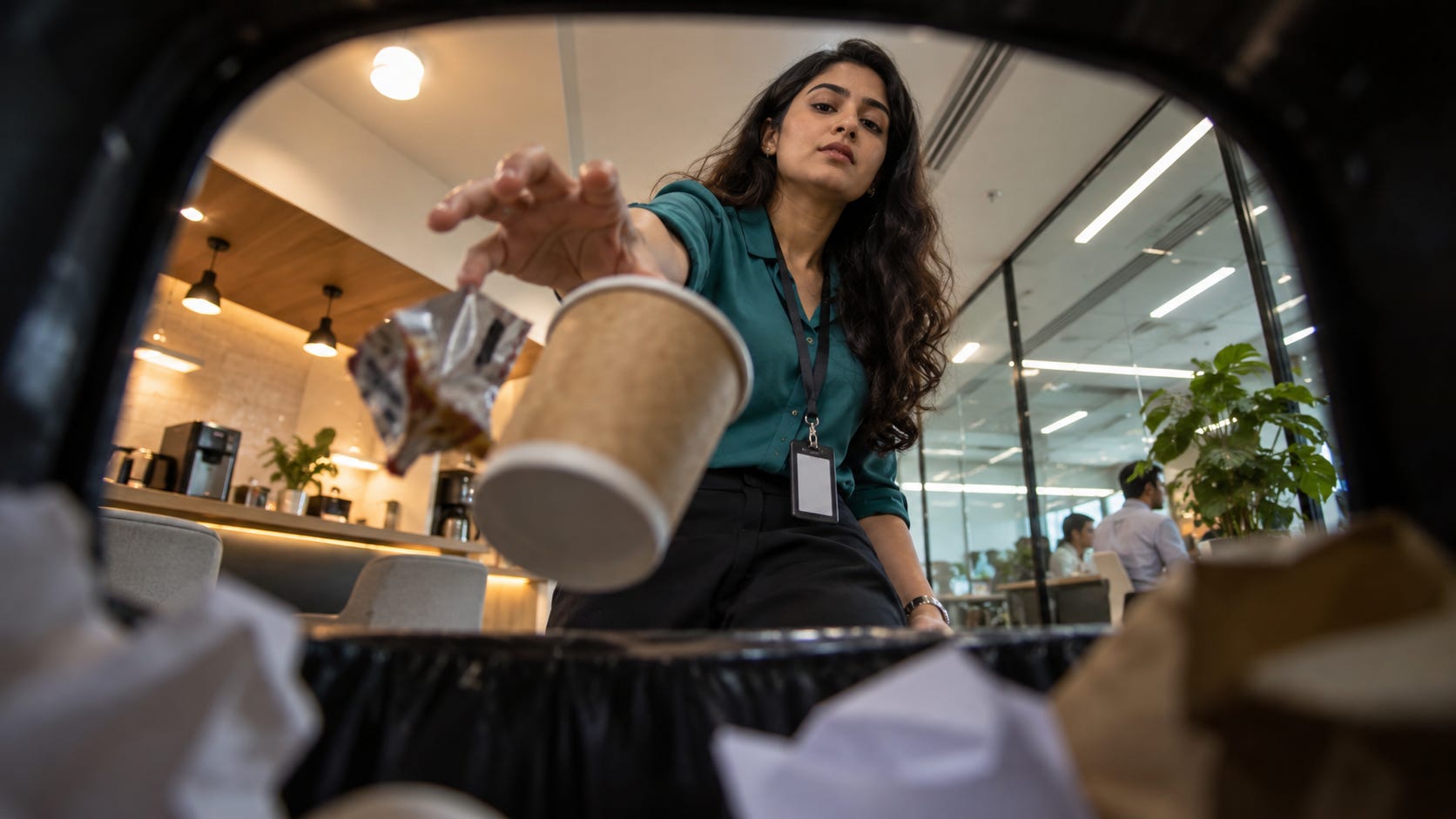
The Real Cost Of Doing Nothing
Let’s get specific about what the new rules actually require.
Under the Solid Waste Management Rules 2026, any office classified as a Bulk Waste Generator, meaning a campus over 20,000 square metres, or generating 100 kg of waste a day, or using 40,000 litres of water a day, has to segregate waste into four separate streams: wet, dry, sanitary, and hazardous or special care.
Miss that, and the Polluter Pays principle kicks in: environmental compensation, charged directly, with District Collectors now required to run annual landfill audits to check who’s actually complying.
A centralized digital tracking portal is going to follow where bulk waste generators’ trash goes, stream by stream.
For the first time, a company’s waste habits are about to be visible on paper, not just in a dumpster behind the building.
Most offices aren’t ready.
A 2023 fact sheet from Chintan Environmental found Indian cities still send well over half of collected waste to landfills with little to no segregation at source, workplaces included.
Why Your Waste Training Doesn’t Work
Most companies that do try to fix this make the same move: a slideshow during onboarding, an email from HR, a poster near the pantry that says “Segregate Your Waste.”
It doesn’t work.
Only 62% of employees report feeling motivated during standard compliance training, the same category waste and environment training falls under.
Close to a third check out mentally before the session even ends.
Nobody changes which bin they use because they sat through one slide about SWM Rules 2026 a single time in March.
People need a reason to care every single day, not once a year.
So the poster stays up, the bins stay mixed, and the compliance risk stays exactly where it was.
The Idea That Changes Everything: Make It A Game
When companies gamify training instead of lecturing people, the numbers flip.
83% of employees report feeling motivated during gamified training, against 28% for standard sessions, roughly three times the engagement from the same material, delivered differently.
Cognizant, a company with one of the largest workforces in India, built exactly this kind of approach into its sustainability training and reported real gains in employee participation, built on points and competition instead of more slides.
89% of employees in gamified programs say they feel more productive at work.
88% say they’re happier.
Sorting plastic from paper correctly does not usually make anyone happy.
A leaderboard does.
People show up for points and for the chance to beat the team on the next floor. That’s one of the oldest levers in human behavior, and it works just as well on waste segregation as it does on sales targets.
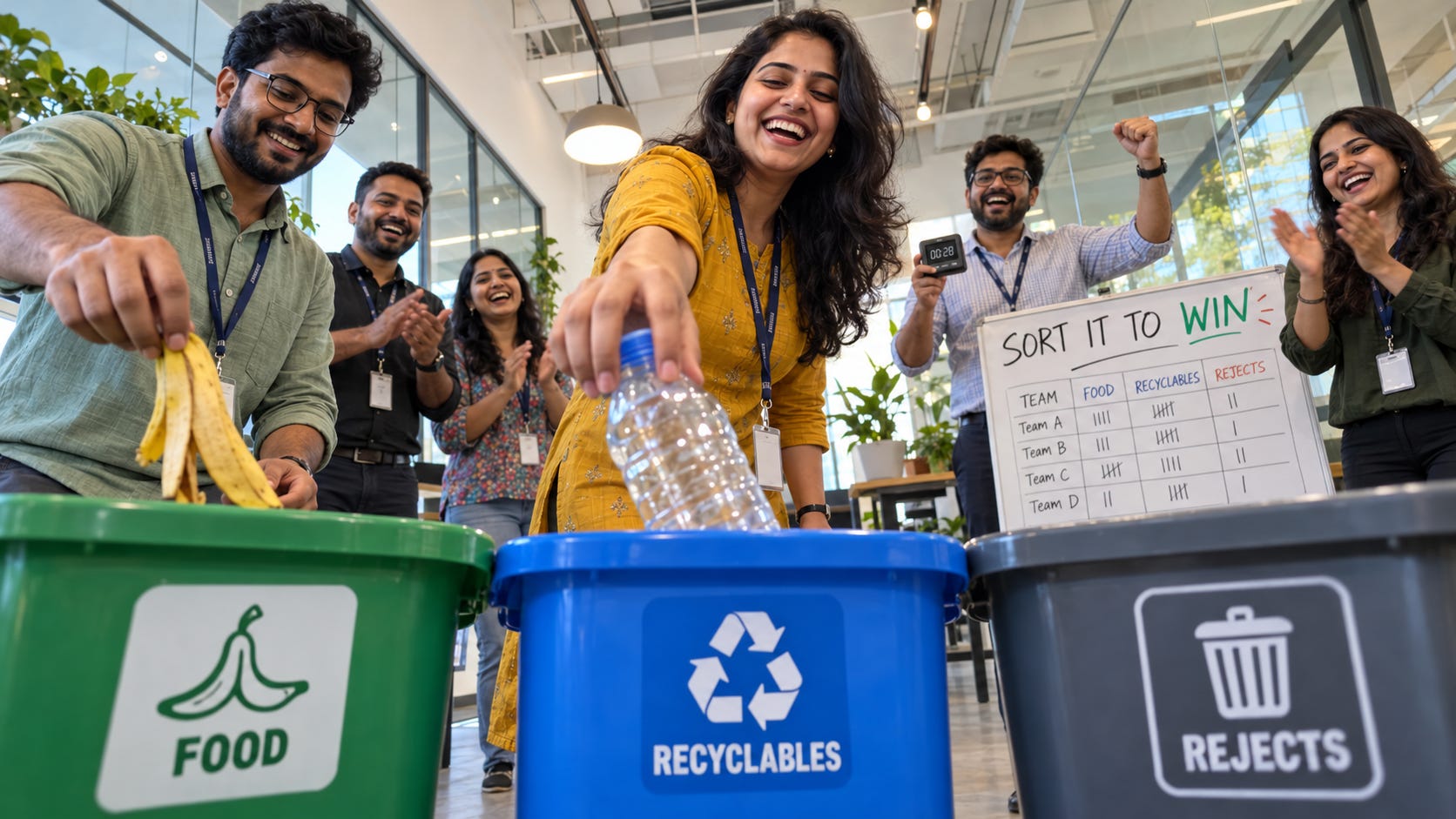
Cercle X already builds exactly this kind of program, point systems, leaderboards, and SWM Rules 2026 compliance tracking, for over 200 brands across 20+ Indian cities. Call 9626700043 if you want one built for your office.
How To Actually Gamify Waste At Your Office
This is simpler to build than most HR programs. Five moves work for almost any Indian office, any size.
Award points for the right behavior. Correct segregation into the four SWM streams, composting food waste, flagging an overflowing bin: each one earns points, logged on a simple spreadsheet or app.
Put up a leaderboard. Floor against floor, team against team. A shared screen in the cafeteria showing live rankings turns a compliance task into a competition nobody wants to lose.
Reward small and often. A free lunch for the winning team this month. A “Zero Waste Champion” shoutout on the company WhatsApp group. Nearly a third of employees specifically want policy and compliance training gamified first, and this is exactly that category.
Make the impact visible. A monthly number on that same cafeteria screen: kilos diverted from landfill, kilos composted, e-waste collected for proper recycling. People change behavior faster when they can watch the number move.
Celebrate publicly, every month. A mention in the town hall. A badge on someone’s ID lanyard. The reward matters less than the fact that everyone sees it happen.
None of these five need a big budget.
The Company That Wins The Future Takes Out Its Trash Properly
By 2027, expect the best-run companies in India to treat a waste game the way they already treat a wellness app or a gym subsidy: a quiet, ordinary part of working there.
The Solid Waste Management Rules 2026 make segregation mandatory.
They don’t make anyone care about it.
Gamification is what gets employees to actually do the sorting correctly, every day, without a compliance officer standing over the bin.
Untrained employees cost money and invite fines under the new rules.
Trained-but-bored employees go back to old habits within a week of the training ending.
Employees inside a well-built game keep showing up and keep the segregation accurate enough to survive a District Collector’s audit.
If you run an office in India, SWM Rules 2026 already decided that you comply.
What’s still open is how: through fear of a fine, or through a leaderboard people actually want to win.
Build the leaderboard.
Your trash can, and your compliance officer, will both thank you.
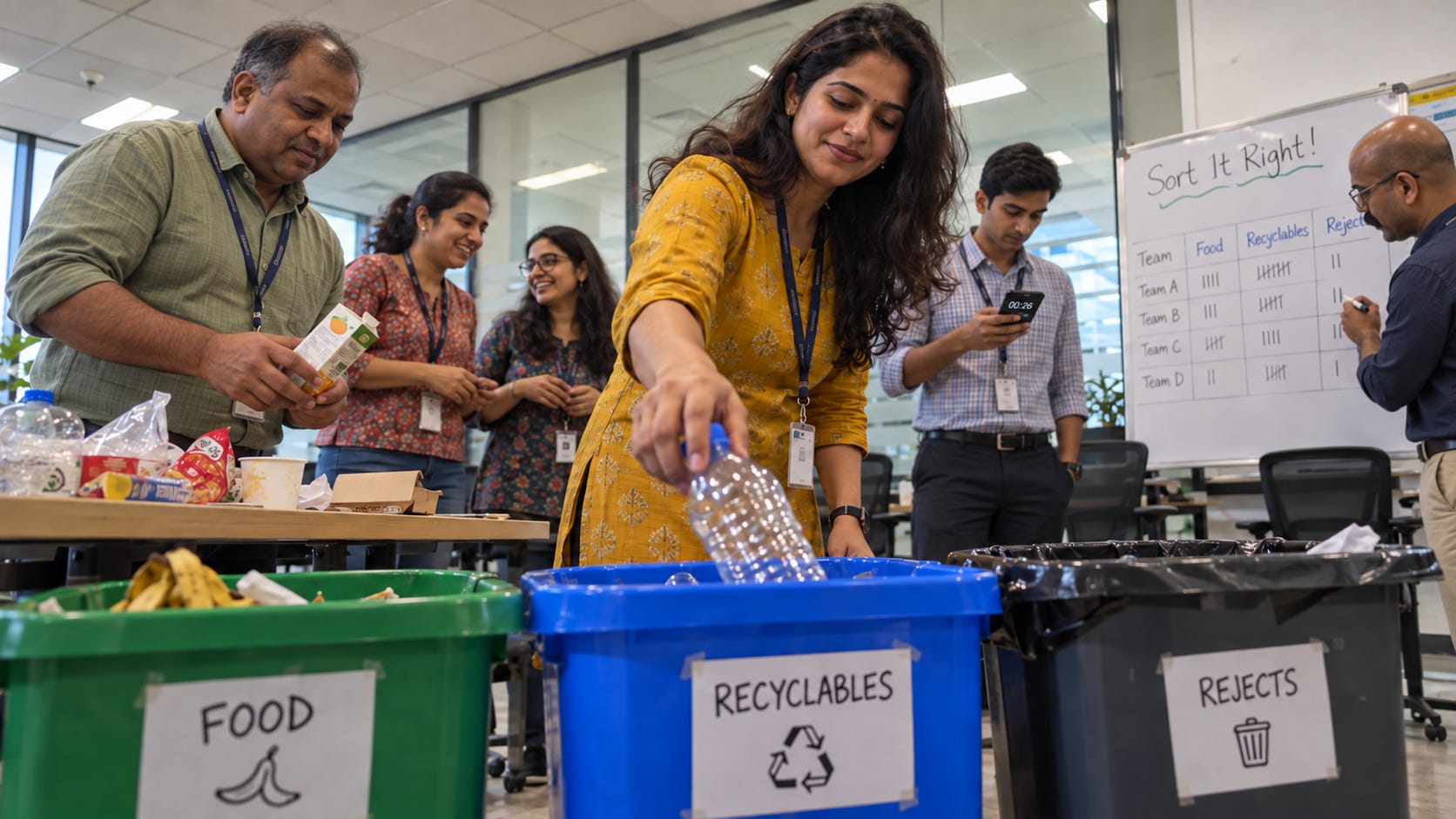
This Already Exists. It’s Called Cercle X.
Cercle X runs on exactly the problem this piece just described.
Across 20+ Indian cities, the company works with over 200 brands on waste at the operational level: segregation audits, EPR compliance paperwork, and a live scrap-bidding marketplace that turns a company’s dry waste stream into revenue instead of a disposal line item.
The gamified employee layer sits on top of that same system.
A company’s segregation data under SWM Rules 2026, the four streams, the Bulk Waste Generator thresholds, the digital tracking portal, feeds straight into a points-and-leaderboard program employees can watch on a screen in their own cafeteria.
That’s the logic behind “Waste Neutral™,” Cercle X’s own positioning.
One audit sets a baseline.
A system that keeps measuring and scoring is what actually moves the number.
Call 9626700043 to get this built for your office.